
 Contact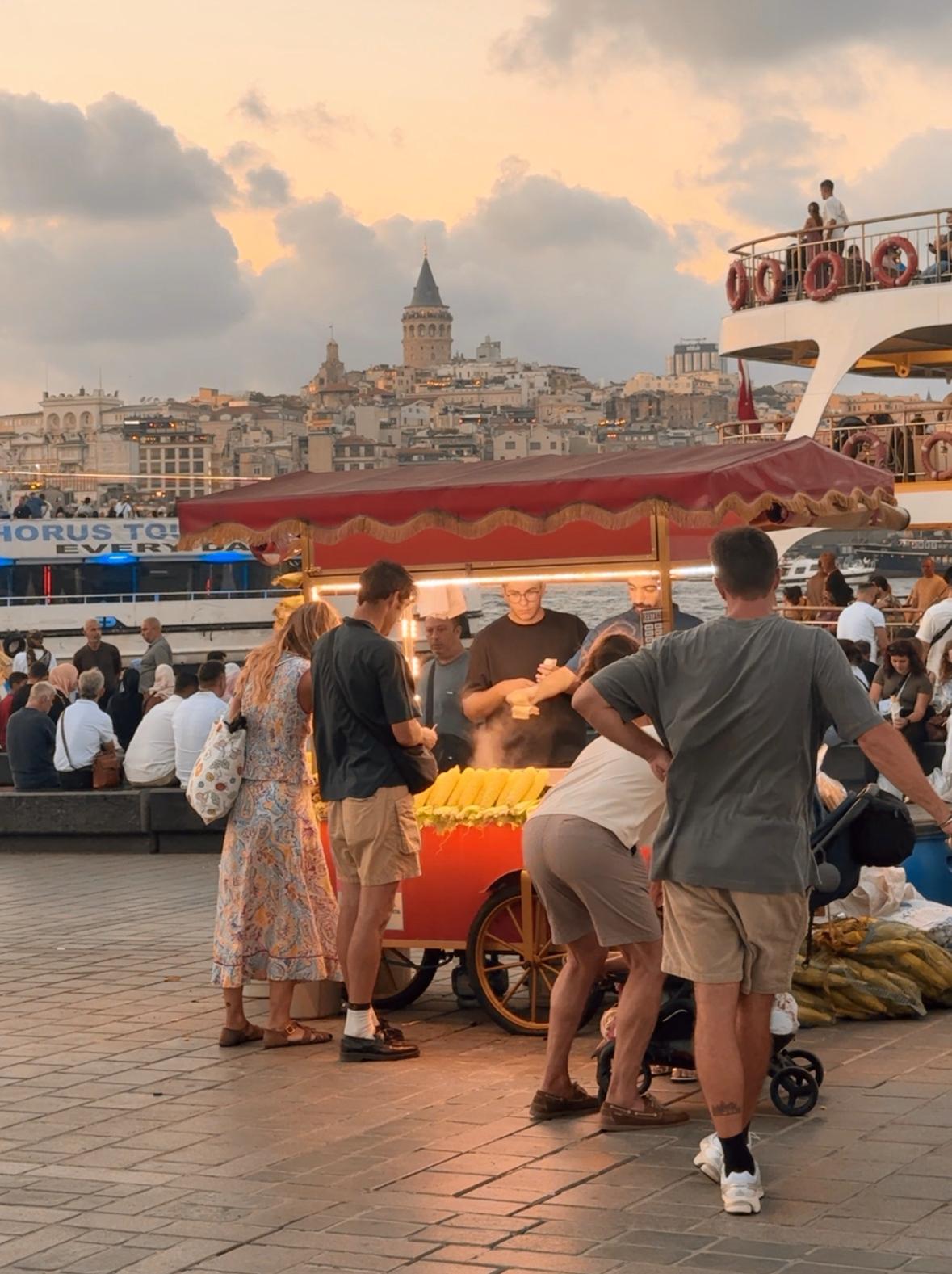
Finding the best food neighborhoods in Istanbul can tell you far more about the city’s culinary culture than searching for a single famous restaurant. Updated for 2026, this guide explores the districts where markets, traditional eateries, bakeries, street food vendors and contemporary cafés reveal how Istanbul really eats.
In a city this large, restaurants open, close, change chefs and evolve constantly, while neighborhoods develop their culinary identities over generations. That is why, when visitors ask me where they should eat in Istanbul, I rarely begin with the name of a restaurant. I am much more interested in the kind of experience they are looking for.
Do they want to wander through a market, sit down for traditional home-style cooking, explore street food, spend the morning over a Turkish breakfast, or discover how Istanbul’s contemporary café culture has developed?
The answer usually points towards a neighborhood.
Kadıköy, Fatih, Eminönü, Karaköy and Beşiktaş each reveal something different about the way Istanbul eats. Their food cultures have been shaped by geography, trade, migration, working life and the communities that made these districts their home.
Choosing where to eat in Istanbul is therefore not simply about finding the highest-rated restaurant. It is about finding the part of the city whose food culture matches the experience you want to have.
Istanbul’s Best Food Neighborhoods at a Glance
Each of Istanbul’s food neighborhoods offers a different experience:
- Kadıköy is best for market culture, regional foods and culinary variety.
- Fatih is ideal for traditional cooking, esnaf lokantaları and regional Anatolian dishes.
- Eminönü brings together street food, historic markets and Istanbul’s commercial heritage.
- Karaköy combines older food institutions with contemporary cafés, bakeries and restaurants.
- Beşiktaş is known for breakfast culture and the energetic rhythm of everyday neighborhood life.
There is no single district that represents the whole of Istanbul’s food culture. If time allows, visiting more than one neighborhood offers a much richer understanding of how the city eats.
Kadıköy: The Heart of Istanbul’s Food Scene
For travelers whose main reason for exploring Istanbul is food, Kadıköy deserves serious attention. Located on the Asian side of the city, it brings together several layers of Istanbul’s culinary life within a relatively compact and walkable area.
The historic streets around Kadıköy Çarşısı are a good place to understand why. Fishmongers display the day’s catch beside greengrocers, pickle shops, delicatessens, bakeries, spice sellers and shops specializing in cheese, olives and cured products. Small restaurants are woven between them, so shopping and eating remain closely connected rather than existing as separate activities.
This relationship between market and table matters. Istanbul’s traditional food culture developed around daily access to ingredients, and Kadıköy still allows visitors to observe some of that rhythm. What appears at the fishmonger changes with the season, vegetables move in and out of prominence, and many prepared foods reflect traditions that existed long before the neighborhood became fashionable with younger Istanbul residents.
Visitors can look for regional cheeses, olives, pickles, seasonal fish, traditional pastries, meze, sweets and home-style dishes. The pleasure of the neighborhood comes from moving slowly, observing what local residents are buying and allowing the market to guide what you taste.
Yet Kadıköy is not one single food scene. Around the Çarşı, the experience remains closely connected to the market and established food businesses. Move towards Moda and the atmosphere changes, with contemporary cafés, bakeries and restaurants becoming part of the neighborhood experience. Yeldeğirmeni has developed another identity, shaped partly by specialty coffee, creative businesses and a younger community.
These newer layers have not completely erased the older ones. A traditional lokanta can operate within walking distance of a modern coffee shop without either feeling particularly out of place.
That combination makes Kadıköy one of the best food neighborhoods in Istanbul for visitors who want variety. More importantly, it shows a city that is comfortable allowing long-established habits and new tastes to exist side by side.
Best for: Markets, regional foods, meze, seasonal fish, traditional shops and contemporary cafés.
Best time to visit: Late morning through lunchtime, when the market is active and the food displays are at their best.
Fatih: Traditional Istanbul on the Table
Fatih tells a very different food story.
As part of Istanbul’s historic peninsula, the district is often approached primarily through its monuments. Yet beyond the major visitor routes, food reveals another layer of its history. Fatih has long been shaped by people arriving in Istanbul from different parts of Anatolia and neighboring regions, bringing recipes, ingredients and ways of eating with them.
That history helps explain the presence of traditional lokantas and restaurants serving regional cooking. Soups, stews, rice dishes, beans, vegetables, stuffed dishes, grilled meats and slowly cooked meals form a much larger part of the experience than the handful of foods most commonly associated with Turkish cuisine abroad.
The esnaf lokantası tradition is especially relevant here. These restaurants historically developed to feed tradespeople, shopkeepers and workers during the day. Rather than ordering from a long restaurant menu, customers often choose from dishes that have already been prepared and displayed at the counter.
This way of eating has a close relationship with ev yemekleri, the broad tradition of Turkish home-style cooking. It also offers an important reminder that Istanbul’s culinary culture cannot be understood through kebabs and street food alone. Much of the city’s everyday cooking happens in pots rather than over grills.
Fatih itself should not be imagined as one uniform food neighborhood. The wider district contains very different communities and commercial areas. Around Aksaray and other parts of the district, successive waves of migration have introduced additional regional and international cuisines.
Older areas such as Vefa preserve different traces of Istanbul’s culinary memory, while Fener and Balat have undergone their own transformation as historic neighborhoods have attracted new cafés, creative businesses and visitors.
This complexity is precisely what makes Fatih interesting. The district does not present a polished summary of “traditional Turkish food.” Instead, it reveals how Istanbul absorbs the cooking traditions of the people who settle within it.
For travelers interested in everyday Turkish cooking, Fatih remains one of the best food neighborhoods in Istanbul, particularly when explored beyond the streets immediately surrounding the major monuments.
Best for: Esnaf lokantaları, soups, stews, rice dishes, regional Anatolian cooking and traditional desserts.
Best time to visit: Lunchtime, when lokanta counters are full and the dishes prepared that morning are still available.
Eminönü: Food Shaped by Trade and Movement
To understand Eminönü’s food culture, it helps to understand why people have been coming here for centuries.
The district sits beside the Golden Horn and the Bosphorus, close to historic commercial areas that connected Istanbul with maritime and overland trade routes. Merchants, sailors, porters, craftspeople and travelers moved through this part of the city long before modern tourism existed, and food naturally developed around that movement.
This history is still visible around the Spice Bazaar and the commercial streets stretching through Tahtakale towards Mahmutpaşa. Spices, dried fruits, nuts, sweets, cheeses, olives and other ingredients fill shops that belong to a much larger history of provisioning a densely populated city.
The streets behind the Spice Bazaar are especially rewarding. While the covered market receives most of the attention, the surrounding lanes reveal a more extensive commercial world. Shops selling coffee, dried goods, kitchen equipment, cheeses, cured products and household supplies serve both visitors and local customers.
Sirkeci adds another layer to the district. Its railway and maritime connections made it a place of arrivals and departures, while the surrounding streets developed restaurants, confectioners and businesses serving people moving through the area.
Street food fits naturally into this environment because Eminönü has always been somewhere people are going rather than simply somewhere they sit. Simit accompanies commuters and ferry passengers, roasted chestnuts appear along busy pedestrian routes, and balık ekmek reflects the district’s relationship with the waterfront. Pickles, sweets and inexpensive snacks belong to the commercial life surrounding the market streets.
The Spice Bazaar adds another dimension. Although parts of it are now heavily oriented towards visitors, its history points towards Istanbul’s role as a city where ingredients and culinary ideas arrived from different regions before being absorbed into local cooking.
Rather than visiting Eminönü simply to collect a list of famous foods, look at the relationship between commerce and eating. The crowds, ferries, market streets, food sellers, hans and historic trading buildings all belong to the same story.
This makes Eminönü one of the best food neighborhoods in Istanbul for understanding how street food and market culture grow out of the movement of a city.
Best for: Market exploration, spices, dried fruits, cheeses, sweets, Turkish coffee and classic street snacks.
Best time to visit: Morning or early afternoon, before the commercial streets become overwhelmingly crowded.
Karaköy: Where Port History Meets Contemporary Istanbul
Across the Galata Bridge, Karaköy presents another version of Istanbul’s relationship between commerce and food.
Historically connected to the port, maritime trade and the diverse communities of the Galata area, Karaköy spent generations as a working district filled with workshops, warehouses, banks and businesses connected to the waterfront. Its culinary landscape developed alongside the people who worked there.
Traces of that older identity remain. Traditional bakeries, small eateries, confectioners and long-established businesses still survive among the neighborhood’s newer restaurants and cafés.
Yet Karaköy has changed dramatically. It has become one of Istanbul’s most visible areas for contemporary dining and café culture. Specialty coffee shops, modern bakeries and restaurants now share streets with businesses belonging to a very different period in the district’s history.
The contrast is what makes Karaköy interesting.
Eating here is not necessarily about searching for the most “authentic” establishment. Authenticity in a city like Istanbul can be misleading if it is understood to mean that nothing should change. Karaköy is valuable precisely because it demonstrates how a neighborhood can retain fragments of its older food culture while developing new habits around them.
It is a good area for combining coffee, pastries or dessert with a longer walk. The waterfront, Galata, the historic peninsula and the streets climbing towards Beyoğlu are all nearby, so food can become part of a broader exploration of the city rather than a separate activity.
For coffee, bakeries, desserts and contemporary dining alongside older Istanbul institutions, Karaköy remains one of the city’s most interesting areas.
Best for: Coffee, bakeries, desserts, modern restaurants and the contrast between old and new Istanbul.
Best time to visit: Late morning or afternoon, particularly if you want to combine food with Galata and the waterfront.
Beşiktaş: Breakfast and the Rhythm of Everyday Life
Beşiktaş has a different kind of energy.
Students, office workers, longtime residents, shoppers and ferry passengers all move through the district, particularly around the market and ferry area. Eating here is closely tied to the rhythms of an active neighborhood rather than to one culinary tradition.
Breakfast has become one of Beşiktaş’s best-known food associations. The district offers everything from large Turkish breakfast spreads to the much simpler combination of simit, cheese and tea.
The contrast is worth noticing because Turkish breakfast is not one fixed experience. A leisurely weekend table shared among friends has little in common with the quick breakfast of someone heading to work, yet both belong to Istanbul’s food culture.
Beşiktaş allows visitors to observe these different rhythms within the same neighborhood. Cafés fill during the slower parts of the day, small restaurants serve local workers, bakeries provide quick meals and tea remains a constant presence.
The market streets also contain fishmongers, greengrocers, small food shops and casual eateries. The area is compact enough to explore without a rigid plan, making it suitable for travelers who want food to be part of a wider neighborhood walk.
You can move through the market, observe what people are buying and stop when something looks interesting rather than arriving with a checklist of restaurants.
Among the best food neighborhoods in Istanbul, Beşiktaş stands out less for one particular dish than for the ease with which food becomes part of everyday local life.
Best for: Turkish breakfast, bakeries, casual food, market streets and everyday neighborhood atmosphere.
Best time to visit: Morning for breakfast or around lunchtime to experience the district at its liveliest.
Which Istanbul Food Neighborhood Should You Choose?
There is no single neighborhood that represents the whole of Istanbul’s food culture, and trying to identify one misses part of what makes the city interesting.
Kadıköy is perhaps the strongest choice for visitors who want markets and variety within a walkable area. Fatih offers a deeper encounter with traditional cooking, regional influences and lokanta culture. Eminönü makes the most sense for travelers interested in street food, markets and the relationship between food and Istanbul’s commercial history.
Karaköy works particularly well for those interested in the meeting point between older institutions and contemporary dining, while Beşiktaş offers breakfast culture and the energetic atmosphere of an everyday Istanbul neighborhood.
Your choice should therefore depend less on a ranking and more on the kind of Istanbul you want to encounter.
If you have several days, an even better approach is to experience more than one. Crossing the Bosphorus from Eminönü to the Asian side, for example, is not simply moving from one collection of restaurants to another. You enter a neighborhood with a different pace, market culture and relationship with food.
The ferry journey itself is part of the experience. Tea, simit, seagulls, the city skyline and the movement between continents belong to Istanbul’s everyday food culture just as much as formal restaurant meals do.
Markets Matter as Much as Restaurants
One reason neighborhood-based food exploration works so well in Istanbul is that the city’s culinary life does not begin at the restaurant door.
Markets, bakeries, greengrocers, fishmongers, pickle shops, delicatessens and small specialty businesses form part of the same ecosystem. They show what ingredients are in season, what people buy for their homes and which foods belong to everyday life rather than restaurant dining.
A market can therefore tell you things that a restaurant menu cannot.
In Kadıköy, looking at the fish counters can reveal the changing season. Around Eminönü, spice and dried-food merchants point towards the city’s history of trade. Neighborhood bakeries reveal local habits through what comes out of the oven at different times of day.
For visitors, these places also create opportunities to taste without turning every food experience into a formal meal. A piece of cheese, a pickle, freshly baked bread or a glass of tea can sometimes reveal as much about Istanbul as a long restaurant reservation.
How to Explore Istanbul’s Food Neighborhoods Like a Local
One of the easiest ways to miss Istanbul’s food culture is to arrive with every meal already planned.
Reservations certainly have their place, particularly for special restaurants, but leave some space for observation. Look at what is happening around you before deciding where or what to eat.
Time of day matters. A neighborhood that feels quiet at 9 a.m. may become intensely active at lunchtime, while another area comes into its own in the evening. Traditional esnaf lokantaları often make the most sense around lunch, when their counters are full and the restaurants are serving the working communities for which they developed.
Season matters too. At a fish market, ask what is good now rather than arriving determined to find one particular species. At a greengrocer, notice which vegetables appear in abundance. A dish that seems ordinary on a menu may become much more interesting when you understand that its main ingredient has just entered its best season.
It also helps to look beyond social media queues. A line outside a famous shop may lead to something excellent, but popularity and local relevance are not always the same thing. Watch where neighborhood residents stop, which bakeries remain busy throughout the day and where workers go at lunchtime.
Most importantly, do not feel that every stop needs to produce an iconic Turkish dish. Istanbul’s food culture also lives in ordinary things: bread still warm from the bakery, tea carried across a shop on a small tray, a seasonal vegetable dish at lunch or cheese tasted while walking through a market.
Those moments are often where a neighborhood becomes visible through its food.
Eating Beyond Restaurant Rankings
Online reviews are useful in a city as large as Istanbul, but they can also encourage travelers to experience food as a series of destinations to complete.
Some of the most revealing food experiences happen differently. You may notice that everyone around you is ordering the same dish at lunchtime, see a queue forming outside a neighborhood bakery or discover that the fish you expected to eat is not the one local sellers recommend that week.
You might enter an esnaf lokantası and choose lunch simply by looking at what was cooked that morning. You may follow the smell of bread into a bakery or stop for tea because everyone else in the market appears to be doing the same.
None of these experiences requires a famous restaurant. They depend on paying attention to the neighborhood and allowing the city to influence what you eat.
That is why exploring the best food neighborhoods in Istanbul is ultimately more useful than building a trip around a list of highly rated establishments. Restaurants are part of Istanbul’s culinary culture, but so are markets, ferry routes, working hours, seasons, migration and the routines of the people who live here.
Once you begin noticing those connections, food becomes a way of reading the city itself.
Frequently Asked Questions About Istanbul’s Food Neighborhoods
Which neighborhood in Istanbul is best for food?
There is no single best neighborhood for every traveler. Kadıköy is one of the strongest all-round choices because its market, traditional food businesses, restaurants and contemporary cafés offer considerable variety within a walkable area. For traditional home-style cooking, Fatih offers a different experience, while Eminönü is particularly interesting for markets and street food.
Is Kadıköy worth visiting for food?
Yes. Kadıköy is especially rewarding for travelers who want to see the relationship between markets and everyday eating. The area around Kadıköy Çarşısı combines fishmongers, greengrocers, bakeries, delicatessens, pickle shops and restaurants, while nearby Moda and Yeldeğirmeni introduce a more contemporary café culture.
Where do locals eat in Istanbul?
There is no single “local” area because Istanbul is a city of millions of people spread across many districts. Residents generally eat close to where they live, work or socialize. This is one reason neighborhood restaurants, esnaf lokantaları, bakeries and markets can offer a more useful perspective on everyday food culture than a list of famous restaurants.
Is the Asian side of Istanbul better for food?
Not necessarily better, but different. Kadıköy on the Asian side is particularly attractive for food-focused visitors because the market and surrounding streets make several types of eating easy to explore on foot. The European side, however, contains very different culinary environments in Fatih, Eminönü, Karaköy, Beşiktaş and many other districts.
What is the best area for street food in Istanbul?
Eminönü is one of the easiest areas for visitors to experience the connection between street food and Istanbul’s commercial life. The waterfront, ferry traffic, markets and busy pedestrian streets create a natural environment for quick foods and snacks. Kadıköy and Beşiktaş also have strong street-food cultures with different neighborhood atmospheres.
What is the best food market in Istanbul?
Kadıköy Çarşısı is one of the best all-round choices for travelers interested in food because it brings together fish, vegetables, cheeses, olives, pickles, bakeries and prepared foods in a compact area. The Spice Bazaar and surrounding streets in Eminönü offer a different experience shaped by spices, dried fruits, sweets, coffee and Istanbul’s commercial history.
Continue Exploring Istanbul’s Food Culture
Istanbul’s neighborhoods are only one way of understanding the city through food. Its street vendors, breakfast tables, working restaurants and seasonal ingredients each reveal another part of the story.
Discover the foods that shape everyday life in Istanbul Street Food: What to Try and Where to Find It.
For a slower start to the day, read Turkish Breakfast in Istanbul: A Ritual of the Table.
You can also step inside the restaurants that feed Istanbul’s working communities in Inside Istanbul’s Esnaf Lokantası: The City’s Everyday Food Culture.
To understand why ingredients and dishes change throughout the year, continue with Seasonality in Istanbul Cuisine: Why Timing Matters More Than Taste.
Explore Istanbul Through Food
The best way to understand these neighborhoods is not simply to move from one famous dish to another. It is to see how markets, local businesses, migration, geography and everyday habits have shaped what Istanbul eats.
Our food experiences are designed around that idea. Rather than treating the city as a checklist of dishes, we explore markets, neighborhood eateries and culinary traditions that reveal how Istanbul’s food culture developed and how it continues to change.
Explore our Istanbul Food Adventure – Hidden Bites & Streets and experience the market culture, neighborhood life and culinary traditions found beyond the city’s familiar tourist routes.
Or join our Istanbul Food Journey: Eat Like a Local, traveling from the historic Spice Bazaar to Kadıköy by ferry while tasting the foods and traditions that connect Istanbul’s two sides.